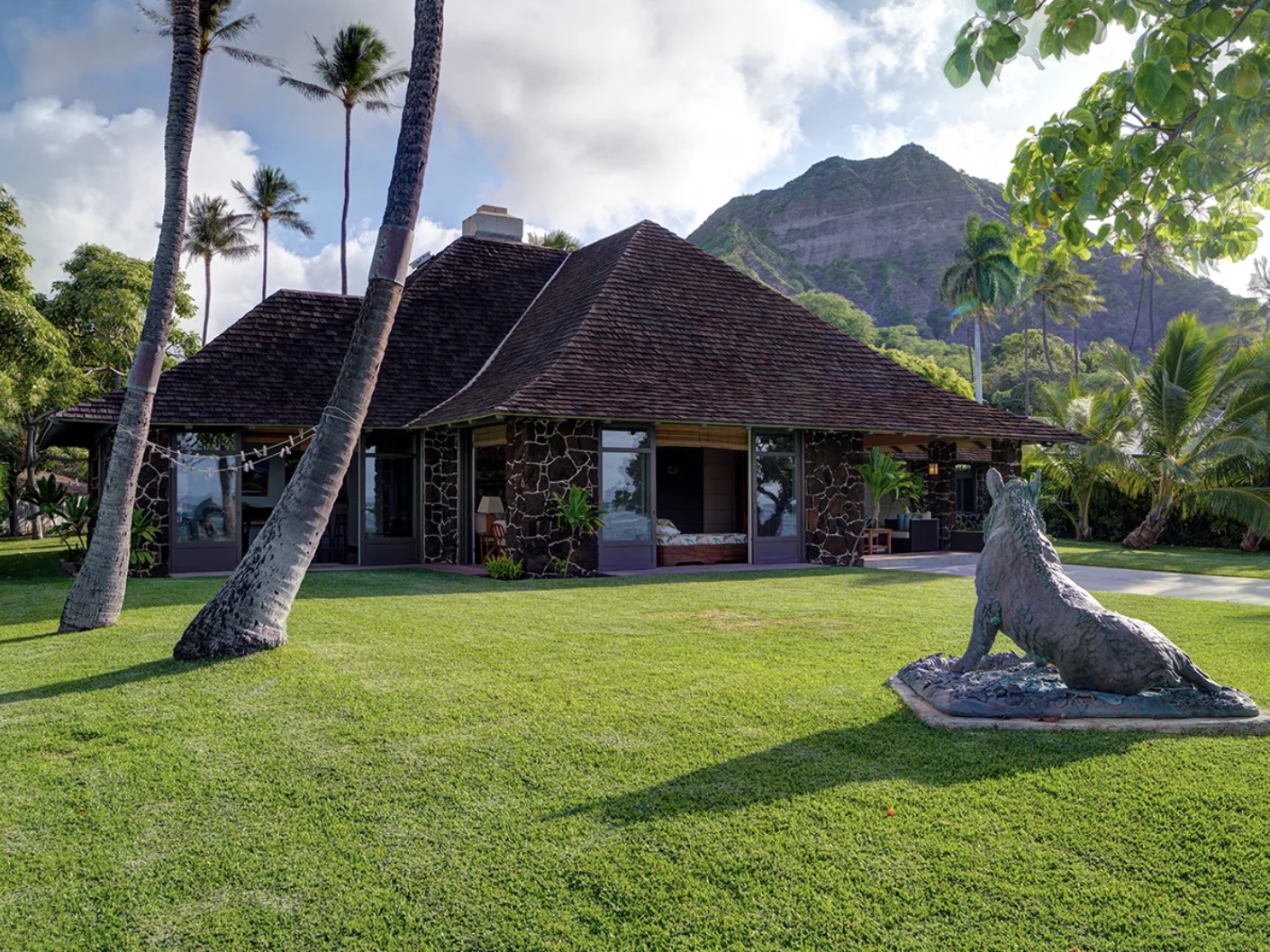
Historic Homes of Hawaii
Hawaii's rich cultural heritage is magnificently preserved in its historic homes and palaces, each telling a unique story of the islands' past. From royal residences to missionary establishments, these architectural treasures provide a tangible connection to Hawaii's diverse history. These historic properties stand as symbol of the Hawaiian Kingdom era, missionary influence, and the cultural synthesis that defines Hawaii's unique identity. Through careful preservation, these homes continue to educate visitors about the complex historical tapestry of the Hawaiian Islands while showcasing remarkable architectural achievements that span several centuries.
Doris Duke's Shangri La: Hawaii's Most Famous Residential Treasure
The most famous residential treasure in Hawaii is undoubtedly Shangri La, the stunning oceanfront estate of American heiress Doris Duke. Built in 1937, this 14,000-square-foot home on Oahu's exclusive Black Point stands as one of America's most important collections of Islamic art. Duke, heir to a vast tobacco fortune, fell in love with Islamic art and architecture during her honeymoon travels and devoted her life to collecting over 3,500 artifacts from countries including Iran, Morocco, Turkey, Spain, and India. The home itself is a masterpiece of architectural synthesis, blending modernist elements with traditional Islamic design principles. After Duke's death in 1993, Shangri La was opened to the public in 2002 as the Shangri La Museum of Islamic Art, Culture & Design, managed by the Doris Duke Foundation for Islamic Art. Today, visitors can tour the property by reservation, experiencing Duke's vision of a true paradise where Eastern and Western design elements harmoniously coexist against the backdrop of the Pacific Ocean.
Ka Hale Lāʻau: The Oldest House in Hawaii
The distinction of being the oldest standing house in Hawaii belongs to Ka Hale Lāʻau, commonly known as the Mission House, located in downtown Honolulu. Constructed between 1821 and 1831, this New England-style frame house was prefabricated in Boston, dismantled, and shipped around Cape Horn to Hawaii, where it was reassembled by the first company of American Protestant missionaries. The house's wooden-frame construction earned it its Hawaiian name, Ka Hale Lāʻau, meaning "the house made of wood." This architectural style was completely foreign to traditional Hawaiian building techniques, which primarily used natural materials like grass, stone, and earth. The Mission House stands as a physical reminder of the profound cultural changes that began with missionary arrival in 1820. Now operated as a museum by the Hawaiian Mission Houses Historic Site, this building illuminates the early interaction between Western and Hawaiian cultures. The property contains two other significant structures: the 1831 Chamberlain House, Hawaii's oldest printing house, and the 1841 Chamberlain House, built from coral blocks quarried from Honolulu's reefs, together forming an important historical complex that documents Hawaii's transformation during the 19th century.
Iolani Palace: The Only Royal Palace on American Soil
The crown jewel of Hawaii's historic structures is undoubtedly Iolani Palace, the only royal palace on American soil. Completed in 1882 under the reign of King Kalākaua, this magnificent structure in downtown Honolulu served as the official residence of the Hawaiian monarchy until the overthrow of Queen Liliʻuokalani in 1893. The palace embodies the progressive vision of King Kalākaua, nicknamed the "Merrie Monarch" for his patronage of Hawaiian cultural traditions and his cosmopolitan outlook. Designed in a unique architectural style known as "American Florentine," the palace incorporated elements of Italian Renaissance and Hawaiian architectural traditions. Remarkably advanced for its time, Iolani Palace featured electricity and telephones before even the White House in Washington, D.C. Following the 1893 overthrow of the Hawaiian monarchy, the palace served as the capitol building for the Provisional Government, Republic, Territory, and early State of Hawaii until 1969. After extensive restoration, Iolani Palace opened to the public in 1978 as a museum. Today, it stands as a poignant symbol of Hawaii's sovereignty and cultural resilience, housing original royal artifacts and furnishings that tell the story of the Hawaiian royal family's sophisticated lifestyle and ultimate tragic loss of their kingdom.
The Mission Houses: Crossroads of Cultural Exchange
The Mission Houses in Honolulu provide another crucial chapter in Hawaii's architectural history. Beyond the aforementioned Ka Hale Lāʻau (the oldest frame house), the Mission Houses Historic Site preserves two additional significant structures that document the American Protestant missionary presence that profoundly shaped Hawaiian society. The Chamberlain House (1831) served as Hawaii's first printing establishment, where missionaries created the first written form of the Hawaiian language and printed numerous religious and educational materials. The printing press housed here produced over 140 million pages in Hawaiian before 1850, facilitating widespread literacy among Native Hawaiians. The third building, the Chamberlain House (1841), constructed from coral blocks, served as a home and storage facility for mission supplies. Together, these three structures comprise the Mission Houses Museum, a National Historic Landmark that illustrates the complex relationship between missionaries and Hawaiian culture. The houses contain original furnishings, household items, and artifacts that demonstrate the missionaries' attempt to recreate New England domesticity in the tropical Hawaiian environment. While the missionary influence remains controversial in Hawaiian history, these buildings provide valuable insight into this pivotal period when Western and Hawaiian cultures first began their complex integration.
Living Heritage: The Continuing Significance of Hawaii's Historic Homes
Hawaii's historic homes reveal a multilayered past where Native Hawaiian, European, American, and Asian influences created a unique cultural and architectural landscape. From the only royal palace in America to the oldest wooden structure in the islands, these buildings are not merely tourist attractions but living repositories of memory and identity. The preservation of properties like Shangri La, Ka Hale Lāʻau, Iolani Palace, and the Mission Houses ensures that future generations can experience Hawaii's rich historical narrative beyond the beaches and resorts that dominate modern perceptions of the islands. Each structure tells a story of cultural exchange, sometimes harmonious and sometimes fraught with tension, that continues to shape Hawaii's identity today. As the Hawaiian cultural renaissance strengthens, these historic properties provide authentic connections to a past that continues to inform contemporary discussions about sovereignty, cultural preservation, and Hawaii's place in the global community. Through careful stewardship and public education, these architectural treasures will continue to illuminate the complex history of America's most geographically isolated state while honoring the diverse peoples who have called Hawaii home across the centuries.
Contributed by Paul Adams, Broker - MegaCapital Hawaii Corp.
 Exclusive Data Available


