Premier Waterfalls of the Big Island
The Big Island of Hawaii, renowned for its diverse landscapes, offers visitors an unparalleled opportunity to experience some of the most magnificent waterfalls in the Hawaiian archipelago. Home to gorgeous valleys, exotic plants, and the heart of ancient Hawaiian folklore, the island's Hamakua Coast is a breathtaking 40-mile stretch of natural wonder spanning from Hilo to Waipi'o Valley. The majority of the island's impressive waterfalls are strategically located on the slopes of the Mauna Kea volcano, particularly near Hilo and along the Hamakua coast. This geographic distribution results from the island's unique topography and rainfall patterns, with the eastern side receiving significantly more precipitation. Access to these natural wonders varies considerably, with some located on public lands and others on private property, necessitating awareness of entrance fees and access restrictions. Safety considerations are paramount when visiting these sites—terrain can be slippery, particularly after rainfall, and swimming in certain pools has proven hazardous in the past. Visitors are advised to adhere to posted warnings, stay on designated trails, and exercise caution when in proximity to waterfall environments.
'Akaka Falls - Video, a mesmerizing 442-foot waterfall within 'Akaka Falls State Park north of Hilo, stands as one of the most accessible and impressive natural attractions on the Big Island. Access requires an entrance fee of $10.00 per non-commercial vehicle or $5.00 per person for pedestrians, with operating hours from 8:30 AM to 6:00 PM, though visitors can enter on foot from sunrise to sunset. The journey to the falls involves a pleasant 0.4-mile loop trail through rainforest teeming with wild orchids, bamboo groves, and draping ferns, typically requiring only 20-30 minutes to complete. While traversing this paved pathway, visitors also have the opportunity to view Kahuna Falls, a smaller but nonetheless impressive waterfall that shares the park with its more famous counterpart. It is worth noting that several sections of the trail incorporate stairs, rendering it inaccessible for those with mobility limitations requiring wheelchair access. For photography enthusiasts, morning visits often provide optimal lighting conditions, with fewer crowds and potential for enhanced visual clarity.
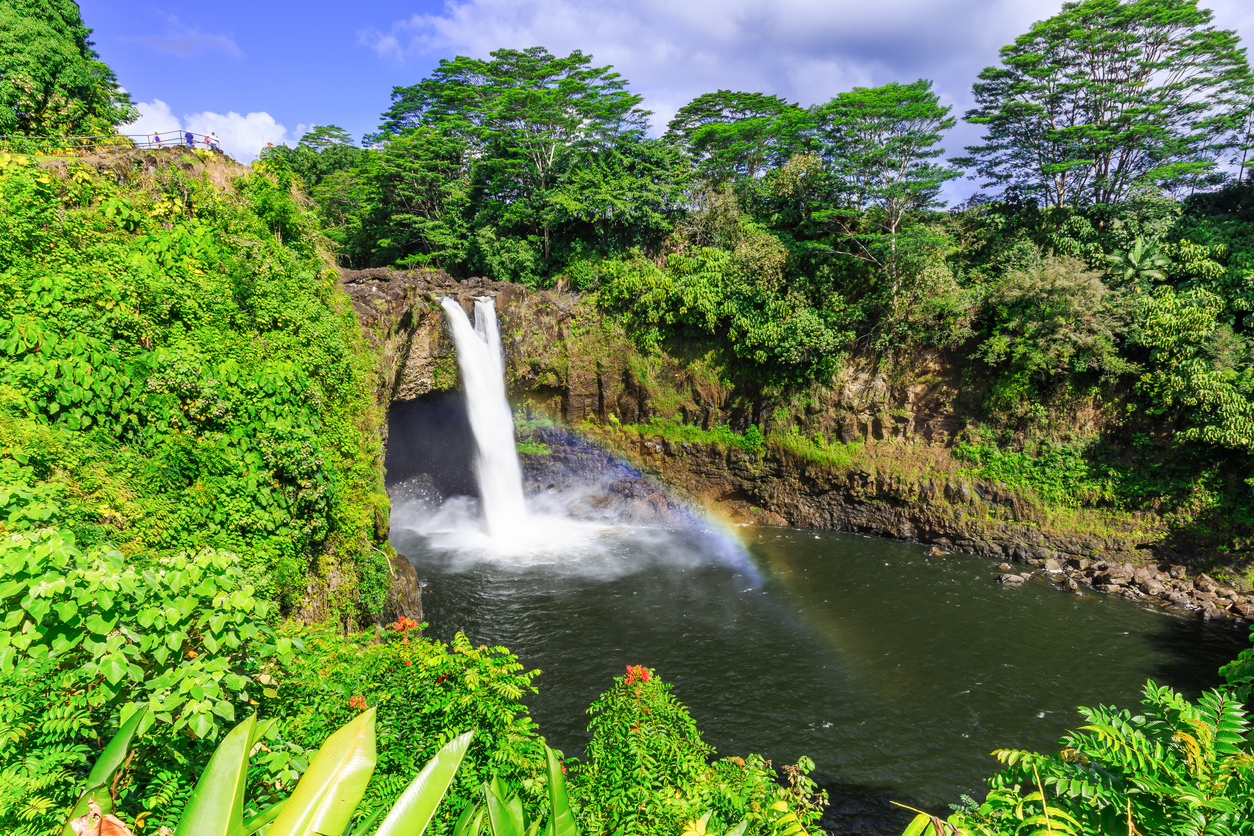
Rainbow Falls (Waiānuenue), located within Hilo town itself, offers visitors the rare opportunity to experience a magnificent waterfall within an urban setting, making it perhaps the most convenient waterfall experience on the Big Island. The waterfall derives its English name from the remarkable rainbow that materializes in the spray when morning sunlight strikes the mist at the optimal angle, creating a magical display most commonly observed during the first half of the day. Beyond its natural beauty, Rainbow Falls holds significant cultural importance in Hawaiian heritage, with historical markers detailing the "Battle of the Wailuku River" and other legends associated with this sacred site. A trail to the left of the Rainbow Falls overlook area guides visitors through a forested area to one of the largest banyan trees in the world. Safety considerations at Rainbow Falls cannot be overstated—swimming above the falls presents significant dangers and is strongly discouraged, and visitors should exercise extreme caution during periods of rainfall, as the Wailuku River can rapidly transform from a scenic waterway to a dangerous torrent.
Hi'ilawe Falls stands as a towering giant among Hawaii's natural wonders, with its impressive height of approximately 1,450 feet establishing it as one of the tallest waterfalls in the entire state. Situated within the legendary Waipi'o Valley, access to this majestic waterfall presents considerable challenges, as it is positioned on private property. While hiking directly to the base of the falls is not permitted due to these property restrictions, visitors can view this magnificent feature by descending into Waipi'o Valley, either via four-wheel drive vehicle or on foot. Alternatively, guided horseback riding tours of the valley offer a more intimate and less strenuous method for approaching advantageous viewpoints. Prospective visitors should be aware of potential variations in water flow that can significantly impact the viewing experience—the river that feeds the falls is partially diverted for irrigation purposes, which can result in reduced water volume even during the traditionally wet season. The Waipi'o Valley itself offers additional attractions that complement a visit to Hi'ilawe Falls, including a striking black sand beach and numerous scenic vistas that make the challenging journey worthwhile even during periods when the falls may not be flowing at full capacity.
Umauma Falls presents a distinctive three-tiered waterfall configuration approximately 16 miles north of Hilo on the Hamakua coast. The falls are situated on private property managed by the Umauma Experience company, with access requiring payment of a $12 per person fee for self-guided walking tours, which also includes admission to the company's garden facilities. Beyond basic viewing opportunities, the company offers a variety of adventure activities that allow visitors to engage with the falls in different ways—zipline tours provide an aerial perspective, while kayak and swimming experiences enable closer interaction with the waterway in designated areas. For those seeking a more immersive experience, swimming is permitted in designated areas below the first waterfall. The cinematic quality of Umauma Falls has not gone unnoticed by Hollywood producers, with the location appearing in several feature films over the years. The Big Island hosts several additional notable waterfalls worth considering, including Pe'epe'e Falls (1.5 miles upstream from Rainbow Falls), Kulaniapia Falls (accessible via a $49 day pass), and Onomea Falls (within the Hawaii Tropical Botanical Garden).
For optimal waterfall experiences on the Big Island, strategic planning is essential. Visitors based in or passing through Hilo can efficiently experience several significant sites in a half-day excursion—beginning with Rainbow Falls, proceeding to Pe'epe'e Falls, continuing to 'Akaka Falls, and potentially concluding with Umauma Falls. The optimal viewing season generally coincides with the wetter months from November through April, though the island's varied microclimates may result in impressive displays year-round in certain locations. Photography enthusiasts should consider timing their visits for optimal lighting conditions—morning hours for Rainbow Falls and early to mid-day for falls situated in deep valleys. Essential equipment includes sturdy, non-slip footwear, rain protection, insect repellent, sun protection, and adequate hydration supplies. Responsible visitation necessitates strict adherence to established boundaries and access guidelines, with all waste materials removed and natural features left undisturbed. Many waterfall sites hold cultural significance in Hawaiian traditions, and visitors should approach these locations with appropriate respect. The Big Island's extraordinary collection of waterfall experiences, ranging from easily accessible urban cascades to remote natural wonders, showcase the island's remarkable diversity and hydrological abundance—'Akaka Falls and Rainbow Falls stand as premier options for accessibility and convenience, while Umauma Falls' activity options or the journey to Hi'ilawe Falls may appeal to those seeking more immersive adventures.
A LEGACY PROPERTY - QUITE POSSIBLY HAMAKUA COAST'S FINEST EVER
45-5038 Nanaina Kai Rd, HONOKAA, HI 96727 - Offered at $9,750,000
Cascading Waterfall Views From Waipio Valley Overlook Luxury Estate
48-5528 Waipio Valley Rd, HONOKAA, HI 96727 - Offered at $1,450,000
Waipio Valley Video - Majestic Aerial Views That Will Leave You Mesmerized
Contributed by Paul Adams, Broker - MegaCapital Hawaii Corp.
 Exclusive Data Available


